Wall Art Guides · 7 min read
How to Choose Bedroom Wall Art: Size, Arrangement and Hanging
A practical guide to choosing bedroom wall art: the right size above the bed, calm colour palettes, pairs and bedside arrangements, and how to hang it safely.
Published
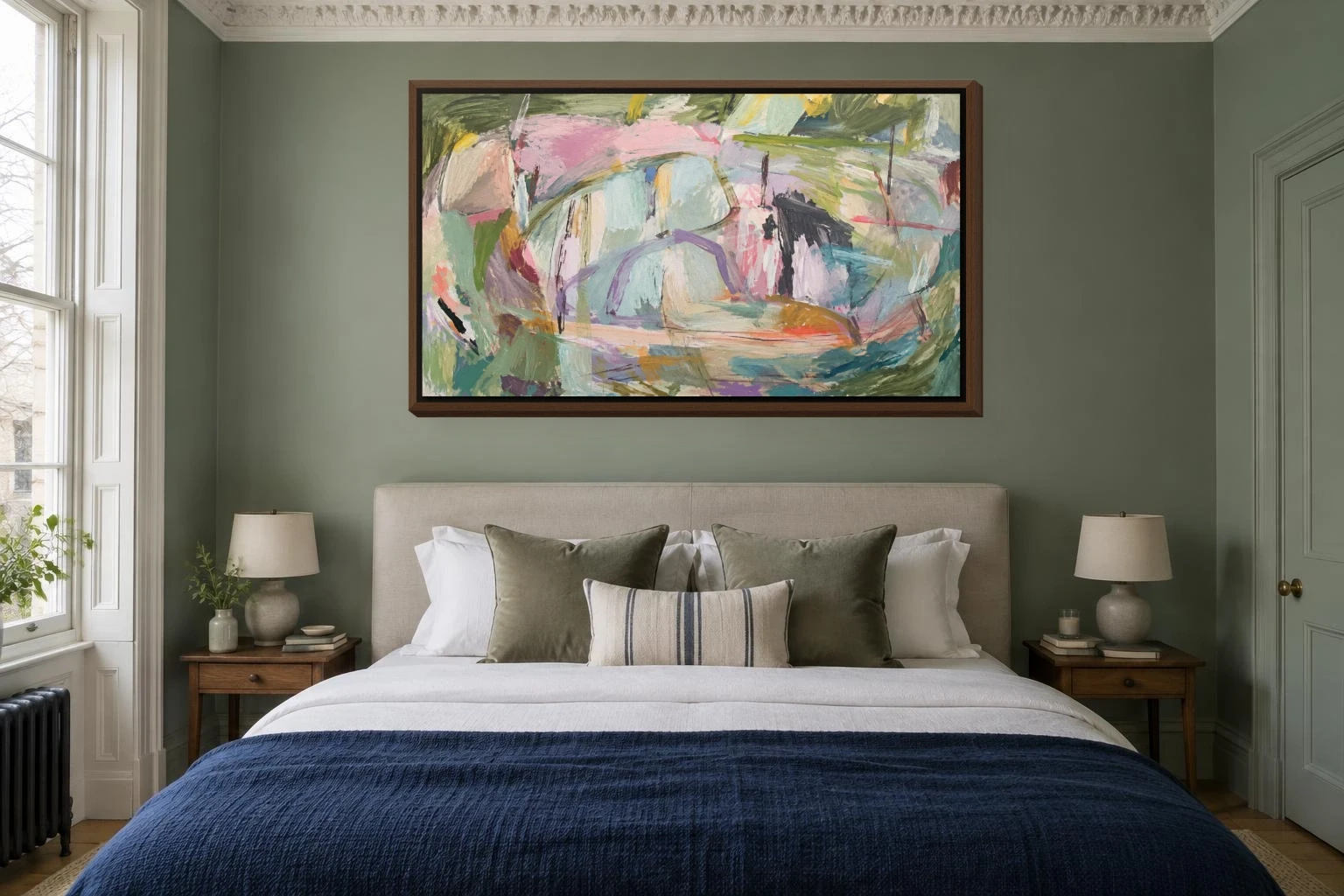
Knowing how to choose wall art for a bedroom comes down to three decisions: the mood you want to wake up to, the size that suits your bed and walls, and an arrangement that feels settled rather than busy. This guide works through each in turn, then covers hanging height and safety, so you can choose with confidence before you drill a single hole.
Start with the mood of the room
A bedroom is the one room where most people want art to slow things down. Softer palettes — muted blues, sage and olive greens, warm neutrals and blush tones — tend to feel restful, while strong contrast and dense, busy compositions can feel lively in a room meant for winding down. That does not mean bedroom art has to be quiet; it means the energy should match how you use the room. A guest room that is mostly seen in daylight can take a bolder piece than a main bedroom used late at night.
A good test is to look at the room at the times you actually use it. Morning light, bedside lamps and blackout curtains all change how colour reads. If you can, hold a printed sample or a phone image up against the wall at night as well as during the day. Our blue wall art, green wall art and neutral wall art collections are useful starting points for calm schemes.
How big should art above a bed be?
The most common question is size, and the most reliable starting point is proportion: artwork around two-thirds of the width of the bed usually looks balanced. Measure the bed or headboard rather than the mattress label, because headboards often add width.
Quick sizing guide by bed width
For a standard UK double of 135 cm, aim for artwork roughly 90 cm wide. For a king of 150 cm, roughly 100 cm. For a super king of 180 cm, roughly 120 cm. In our range, that corresponds to sizes such as 90 × 60 cm, 100 × 100 cm and 120 × 80 cm, all listed with exact dimensions on each product page. Browse the full range by scale in large wall art.
If you are torn between two sizes, the larger is usually the better choice above a bed; small pieces tend to look lost against a headboard. The exception is a low ceiling or a sloping wall, where a wider, shorter landscape format keeps the composition comfortable. Our wider guide to choosing the right size wall art covers other rooms and furniture.

How to arrange wall art in a bedroom
There is no single right arrangement, but a few layouts work reliably in bedrooms because they respect the strong horizontal line of the bed.
One landscape piece above the bed
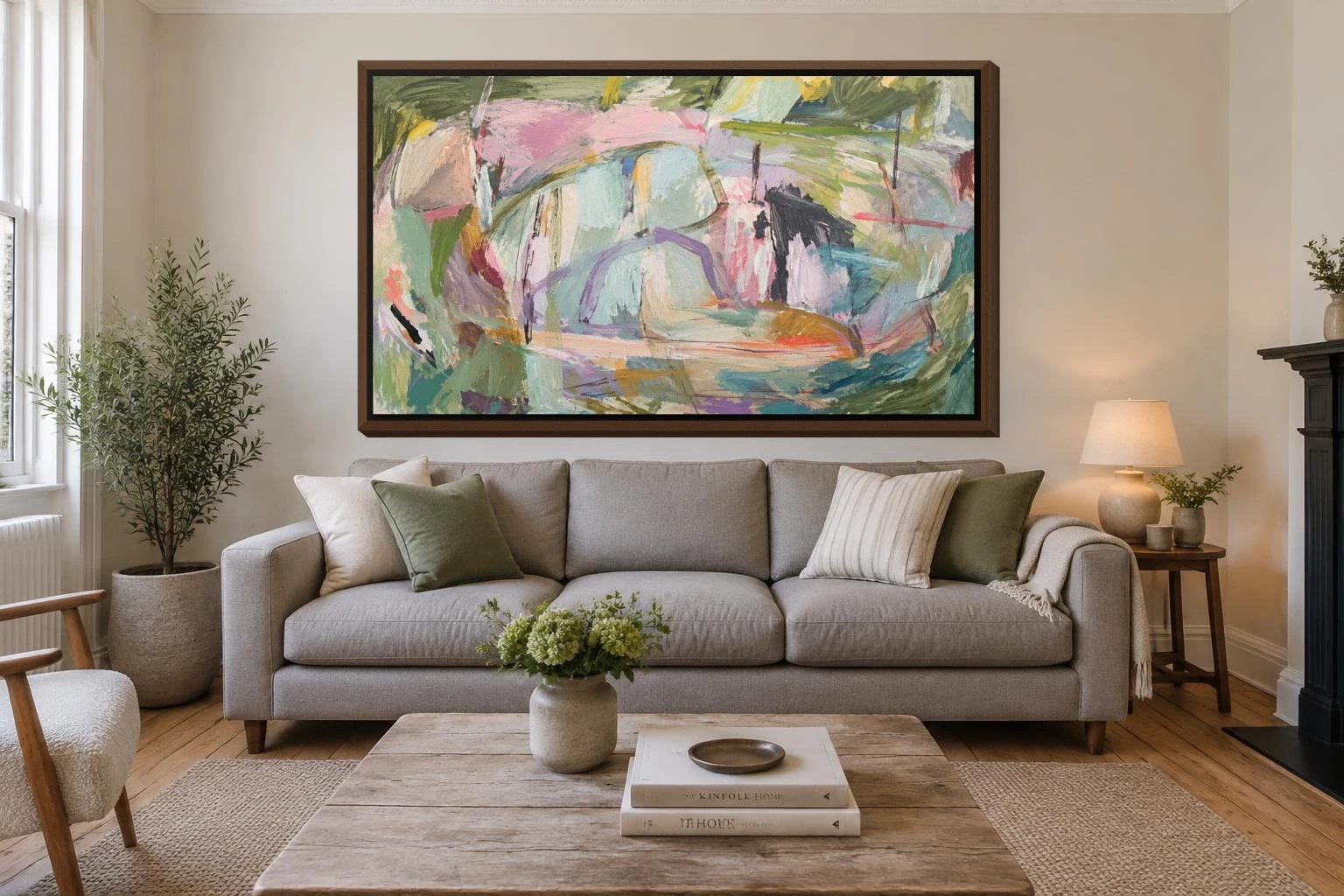
The simplest and calmest option. Centre the artwork on the bed, not the wall, if the bed is off-centre. A softly coloured landscape abstract such as Pastel Counterpoint or Structures of Reverie suits this layout well.
A pair hung side by side
Two portrait or square pieces of the same size suit wide beds and panelled walls. Keep the gap between them small and even — around 5–8 cm, the same spacing we suggest in our gallery wall guide — so they read as one composition. Choosing the same frame finish for both helps them feel deliberate.
Smaller squares above the bedside tables
Matching square canvases above each bedside table frame the bed without crowding the headboard, and they work well where a window or wall lights take up the space above the bed itself. Square sizes start at 30 × 30 cm.
The wall opposite the bed
This is the view you wake up to, and often the better place for a bolder or more personal piece. Because it is seen from a distance, it can usually go larger than you expect.
Where to hang wall art in a bedroom
Above a bed, leave roughly 15–25 cm between the top of the headboard and the bottom of the frame, so the bed and artwork read as a group without the frame touching your head when you sit up. On an open wall with no furniture beneath it, hang with the centre of the artwork at around 145–150 cm from the floor, which is roughly eye level for most adults.
Many bedrooms have a radiator beneath the window. We suggest keeping artwork away from active heat sources; our guide on whether you can hang wall art above a radiator explains why and suggests alternative positions.
Hanging art above a bed safely
Because people sleep beneath it, artwork above a bed deserves secure fixings. Use fixings suited to your wall type — plasterboard, timber stud or masonry each need a different approach — and rated comfortably above the weight of the piece. Two fixing points keep a wide canvas level and reduce the chance of it shifting. If you are unsure what your wall is made of, ask a qualified tradesperson before drilling.
One practical advantage of a float-effect canvas is that there is no glass. Our artworks are printed onto canvas and set in a 30mm float-effect frame, so there is no glazing above the bed and no glare from bedside lamps or morning light.
Choosing a frame finish for a bedroom
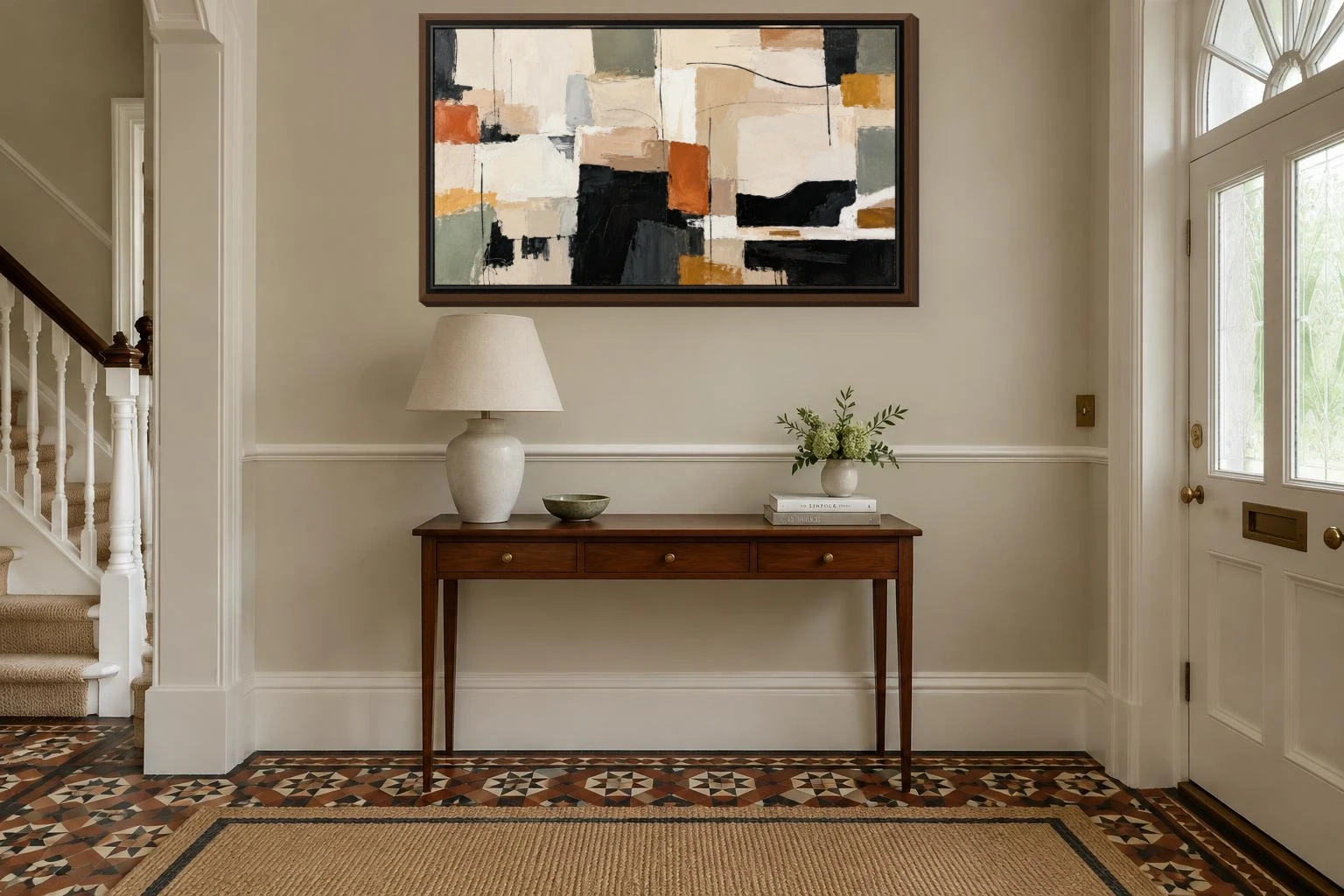
Match the frame to the furniture rather than the artwork. Natural Oak and White keep a light, airy bedroom fresh; Walnut suits darker timber and warm, cocooning schemes; Black gives definition in monochrome rooms. Our framed wall art collection explains the four finishes in more detail, and warm neutral compositions such as Ochre Intervals show how earthy tones sit beside timber.
Quick bedroom wall art checklist
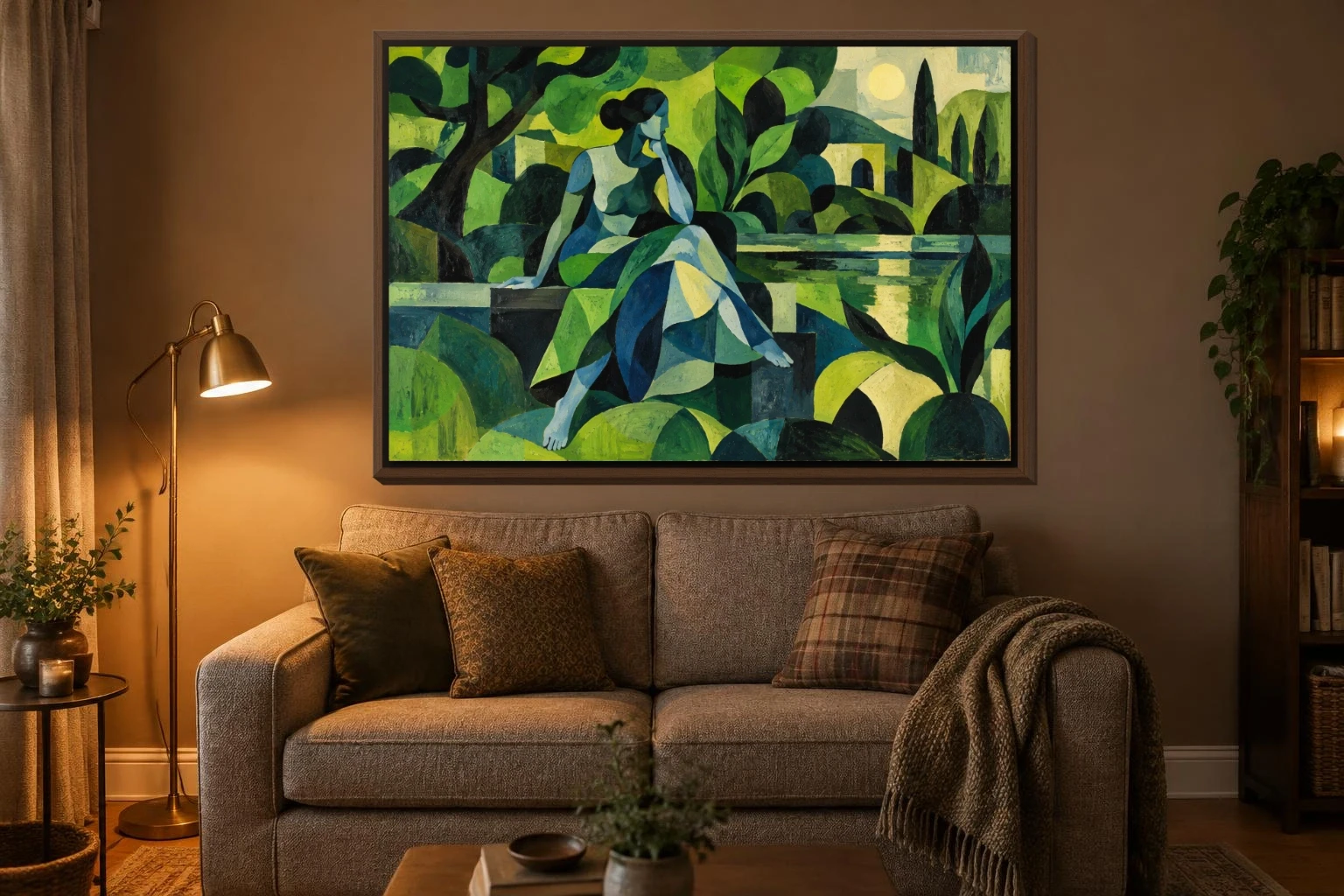
Measure the bed and aim for about two-thirds of its width. Leave 15–25 cm above the headboard. Choose one layout: a single landscape, a pair, or bedside squares. Pick a palette that suits the room at night as well as by day. Use secure fixings matched to your wall. When you are ready, browse our bedroom wall art collection, where every artwork lists its exact sizes and frame finishes, or explore botanical calm in A Garden Apart.
The featured artwork
Pastel Counterpoint Wall Art – 30mm Float Effect Framed Canvas
A premium canvas reproduction of an original painting, handcrafted in a 30mm float-effect frame.
Explore the collections