Styling Ideas · 4 min read
Knock-through Living Room Wall Art: Which Wall Should Lead?
Two chimney breasts, one joined room: choose the main artwork position, decide when alcoves can stay quiet and weigh up the long wall.
Published
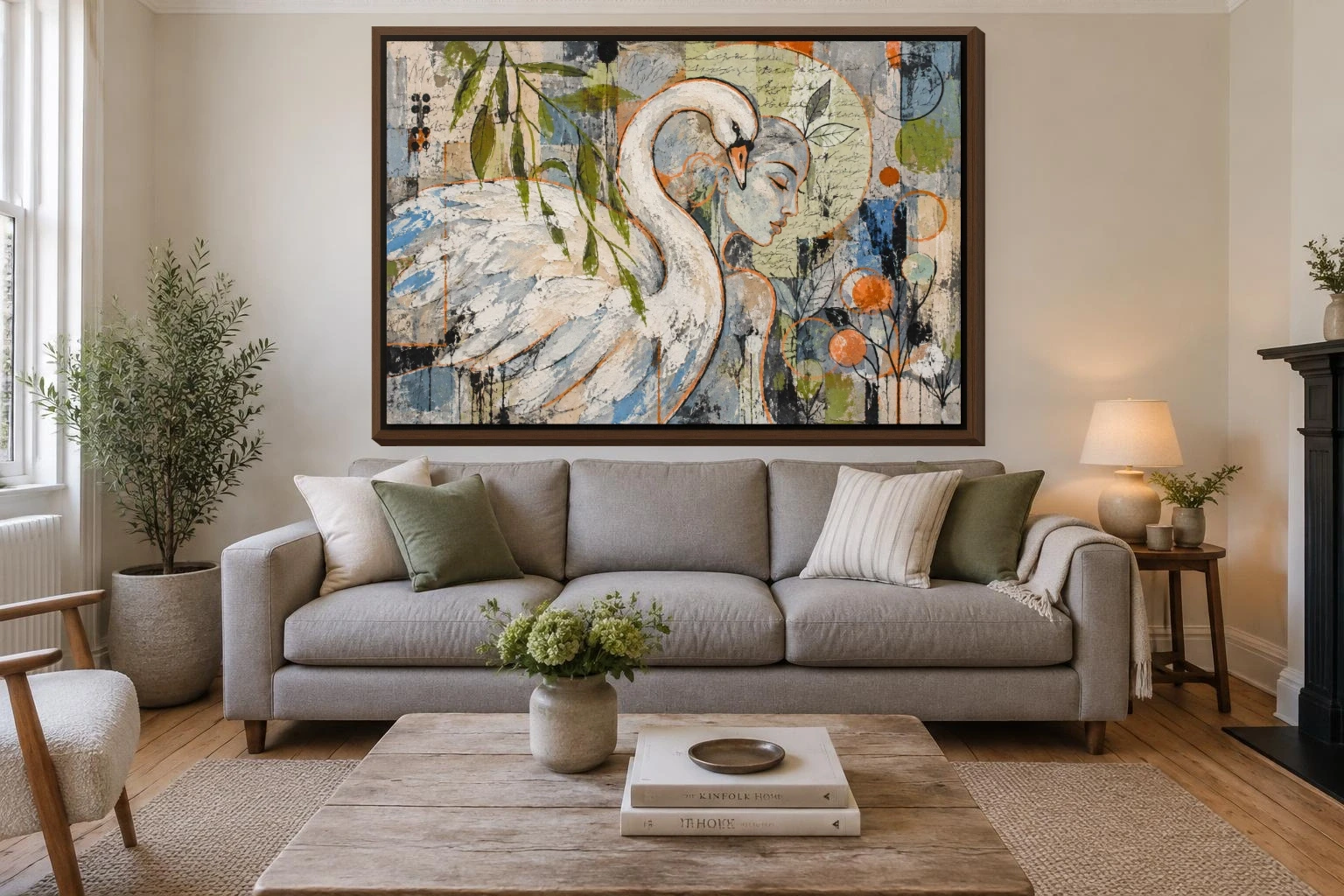
In a through lounge, consider the two joined reception rooms as one composition rather than planning matching fireplace displays. When choosing knock-through living room wall art, start with your usual seating views, then decide whether the front chimney breast, rear breast or opposite long wall deserves the main artwork.
Start with the views you actually use
Sit on the sofa, try the armchair and look back from the rear room. Ask which wall you can see comfortably without turning, and whether the retained opening conceals part of it. Give these everyday viewpoints more weight than the entrance view alone, especially if one room is mainly somewhere you pass through.
Next, assess mirrors, televisions, shelving and mantel objects together. If a mirror already feels right over one fireplace, keep it in your first arrangement. Judge available space between architectural features rather than treating the whole chimney breast as empty wall.
For knock-through living room wall art, try choosing one principal display before adding supporting pictures. Keep that priority in mind when comparing Living Room Wall Art, rather than shopping for a pair simply because you have two fireplaces.
Option one: let the front chimney breast lead
Choose the front chimney breast if it offers the most satisfying view from your main seating. Imagine the artwork centred over the fireplace, with clear wall around it and restrained alcoves on either side. Assess it against both the mantel and the breast rather than automatically filling the widest available space.
At the rear fireplace, retain a useful mirror or try leaving the wall unadorned. Avoid immediately adding a second canvas of equal visual weight. Look through the opening again: aim for the front artwork to hold your attention without needing an answering picture at the other end.
Before committing to a position above a working fireplace, check the appliance’s clearance requirements and the artwork’s care guidance. Choose another wall if you cannot establish that the location is suitable; visual balance should not decide this alone.
Option two: give the rear fireplace the artwork
Reverse the arrangement if the rear breast is the wall you look towards most often. Consider this when a television or established mirror occupies the front fireplace, or your favourite chair faces the rear room. Keep the front display quieter rather than trying to make both ends equally prominent.
Check the proposed artwork from the front sofa and any rear dining seats. Avoid choosing it solely for the doorway view if that leaves it awkward to enjoy while seated. If shelves and mantel objects crowd the rear breast, test the long wall instead.
If both chimney breasts seem equally suitable, compare the same proposed artwork at both positions from your main seat, using a simple temporary paper outline if helpful. As a tie-breaker, favour whichever remains more clearly visible through the retained opening. Check that choice again from the rear room before committing.
Option three: make the long wall the main display
If both chimney breasts already have a purpose, consider neither for the main artwork. Try one furniture-centred arrangement above a sofa or sideboard on the opposite wall. Centre it on that furniture, then check nearby doors and the retained wall returns; avoid using the midpoint of the entire joined room by default.
Alternatively, test two separated groups: one above the sofa and another above a rear sideboard. Leave a deliberate stretch of bare wall between them and make one group quieter. Prefer one arrangement if the second looks squeezed against a doorway; consider two if each belongs comfortably with the furniture beneath it.
For proportion checks, use How to Choose the Right Size Wall Art. If either arrangement includes several pictures, consult How to Create a Gallery Wall once you have settled on the display position.
Let alcoves remain quiet where it helps
Try leaving alcoves without pictures when they already contain books, lamps or decorative objects. Assess them alongside both fireplaces, not as isolated gaps to fill. If the combined view feels busy, remove a few mantel accessories before deciding that more artwork is the answer.
Where an alcove feels unfinished, test one modest picture rather than automatically creating a matching pair. Look across the joined room: keep it only if it supports your main display. You might leave the opposite alcove bare to give the eye somewhere to rest.
Connect the rooms through colour, not matching displays
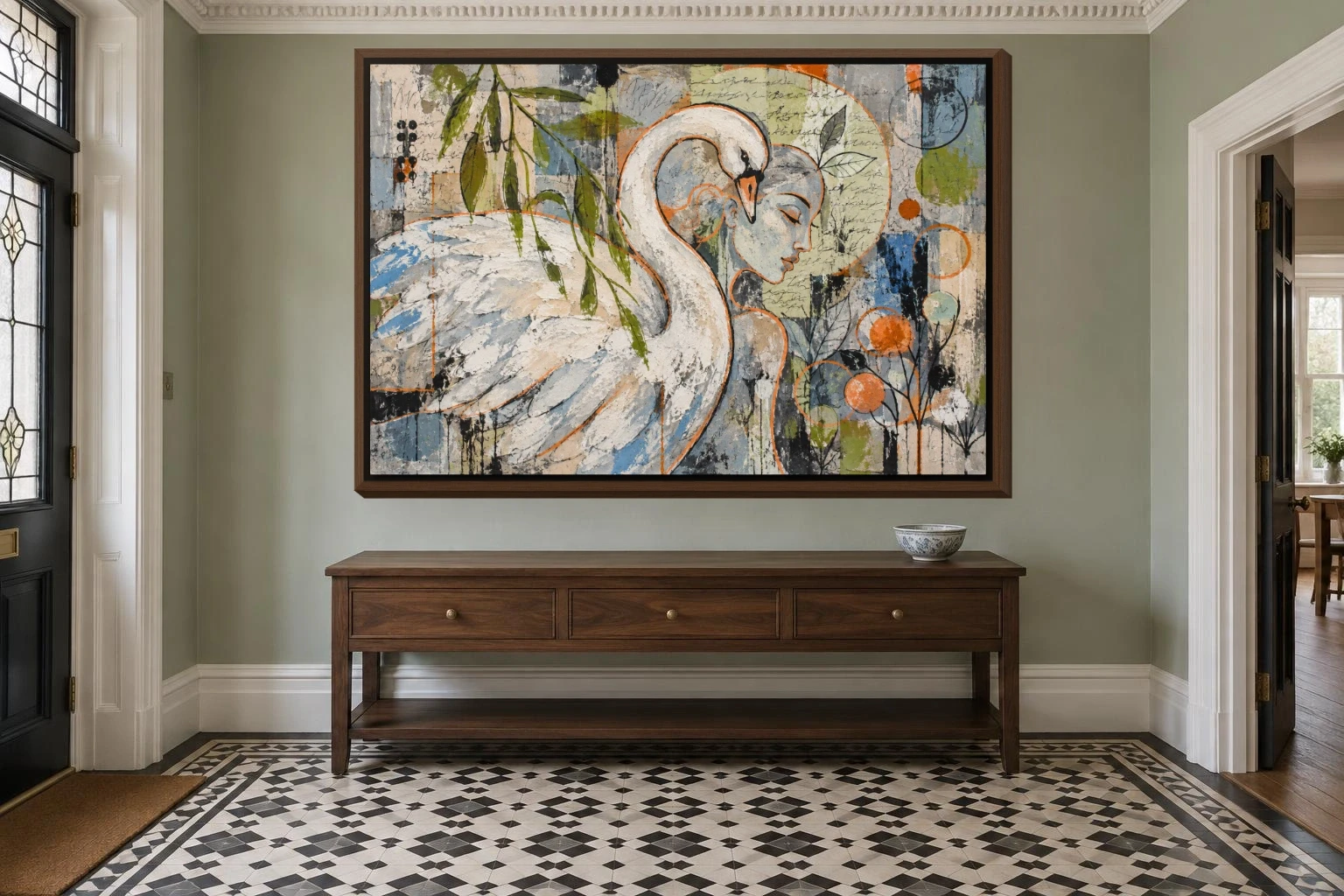
A Swan’s Reverie – 30mm Float Effect Canvas depicts a white swan beside a serene female profile, with olive leaves, handwritten marks and orange accents in a layered contemporary composition printed onto canvas. In the cover image, the framed artwork hangs above a wooden console on a pale green wall. Consider that furniture-centred arrangement when assessing your long wall, rather than treating the image as a fireplace-placement example.
To carry the canvas colours through both rooms, try an olive cushion near the front seating or a small orange accent at the rear. With a patterned rug, compare its colours and detail with the artwork before adding more accessories; consider repeating a colour rather than another figurative motif.
Finally, revisit your chosen position in daylight and with evening lamps switched on. Check whether you can still enjoy the main subject from your usual seats, and adjust lighting or reconsider the wall if reflections or shadow make the display difficult to read.
Explore A Swan’s Reverie with your preferred display wall and main seating view in mind.
The featured artwork
A Swan’s Reverie Wall Art – 30mm Float Effect Framed Canvas
A premium canvas reproduction of an original painting, handcrafted in a 30mm float-effect frame.
Explore the collections